

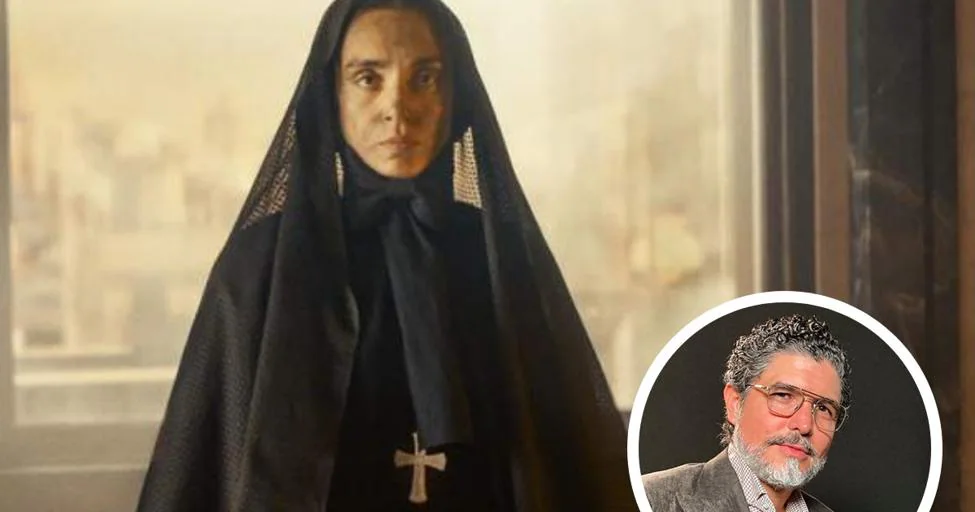
Francesca Cabrini, a name that echoes with resilience, was born for a fight. Her story is one of relentless struggle, for her survival, for the lives of others, against the disdain of men, and against the scorn of Americans who treated her as an inferior being for being Italian. But, undeterred, she won the hearts of all, becoming the patron saint of immigrants, the first American saint, and also the first woman to lead a religious order.
Cabrini established a network of hospitals worldwide, showing compassion for the vulnerable, the poverty-stricken, and the orphaned immigrants who found themselves living in the squalor of Five Pints, likened to rats as noted in a New York Times article from that period.
The awe-inspiring battles of this nun are depicted in the film ‘Una mujer italiana (Cabrini)‘, which premieres in theaters this Friday. The film traces her journey as the founder of the Missionaries of the Sacred Heart of Jesus congregation in the 19th century.
Alejandro Monteverde, the director of the film, sought to create a cinematic tribute that celebrated the universal strength of women rather than a religious film. He wanted to make a film like ‘Gandhi’, where her religious habit did not interfere with her mission.
Monteverde asserts that he did not want to bifurcate the audience by focusing solely on Cabrini’s religious facet. Interestingly, Jesus’ name is only mentioned once in the film, a decision that contrasts with his previous film, ‘Sound of Freedom‘, which was a box-office hit due to its polarizing effect on society.
The filmmaker has a passion for exploring taboo themes, subjects that people are wary of discussing, such as child sexual abuse. This mission is evident in his work and was shared in an interview with ABC.
It is surprising that ‘Una mujer italiana (Cabrini)‘ has been stripped of its religious aspect, especially when Angel Studios, a Christian distribution company responsible for another phenomenon, ‘The Chosen‘, a series about Jesus Christ that was a hit in the US, is backing it.
Emulating the successful marketing campaign of ‘Sound of Freedom‘, which according to Trump supporters and the QAnon movement was attempted to be sabotaged and censored by the elites, could have been tempting. After all, Monteverde’s previous film raked in over $182 million.
However, Monteverde insists on making films that «build bridges, not separate». He laments our tribal society where even sharing a glass of wine with someone of differing political views is a challenge.
In ‘Una mujer italiana‘, the antagonist ends up toasting with Cabrini, acknowledging the courage of a woman he once wished were a man. Cabrini was a warrior who sought social change and built an independent empire that rivalled Rockefeller’s. Monteverde concludes, emphasizing Cabrini’s significant contribution.