

Catalan Economic and Social Organizations Call for a New Autonomous Financial Model
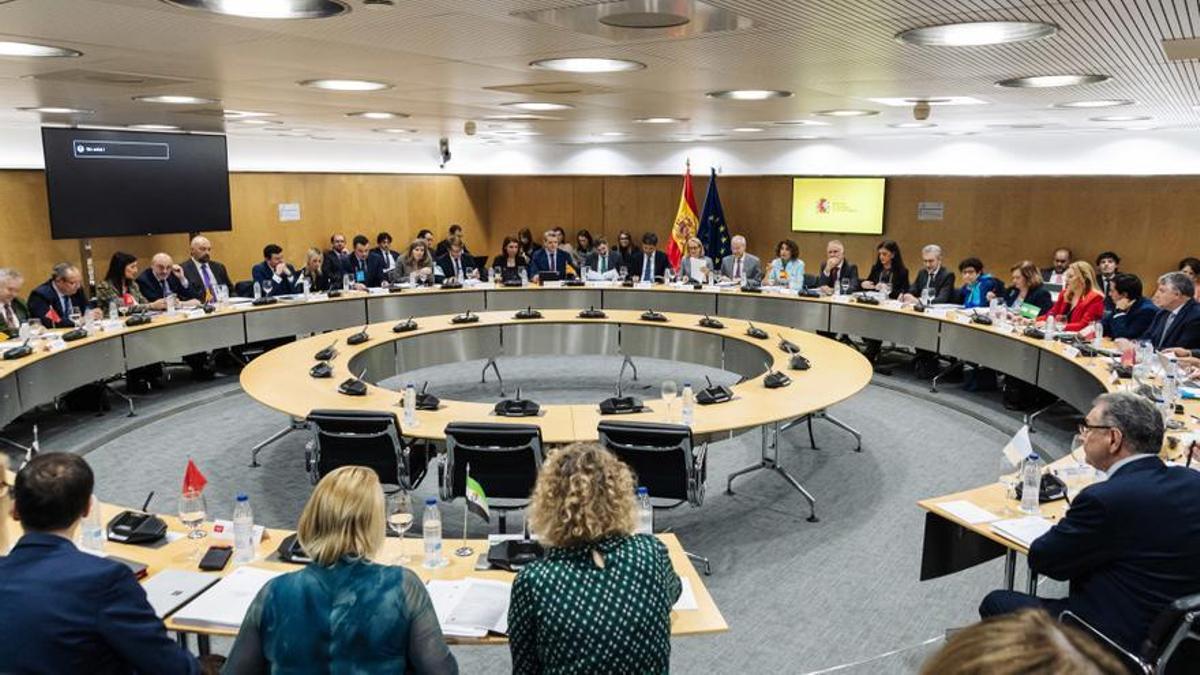
On the same day that the Consejo de Política Fiscal y financiera (CPFF), or the Fiscal and Financial Policy Council, convened, the so-called G-8, a group of Catalan economic and social organizations, reiterated their demand for a new autonomous financing model. This new model, they insist, must ensure financial autonomy, significantly improve tax management capabilities, and uphold the principle of ordinality, which is essentially the balance between what a territory contributes and what it receives in return.
This request is not a new one. The group has previously called for an ambitious reform of the financing system, which has been outdated since 2014. They have suggested various options, ranging from a fiscal agreement to a federal model. Now, the Consell de Cambres – an assembly of 13 Catalan chambers led by Barcelona’s – along with Pimec, Foment del Treball, Femcat, the Col.legi d’Economistes de Catalunya, the RACC, Barcelona Global, and the Cercle d’Economia, are doubling down. They are insisting on a reform based on the principles of transparency, equity, and efficiency, within a framework of institutional loyalty.
The Need for Urgent Reform
These organizations have expressed their concern that the current autonomous financing system is hindering the economic progress of many autonomous communities, including Catalonia. They argue that there is an urgent need to address this issue, as financing deficits are accumulating and are affecting the potential for economic progress and social welfare in the region. According to this group of entities, it is crucial to seize the moment to find and agree on solutions, bearing in mind that the implementation of a new model is the responsibility of the political forces legitimized by the citizens.
Indeed, in March they specified that the model should ensure financial autonomy, improve tax management and collection capacity, and uphold the principle of ordinality, as well as taking into account the differential cost of living among communities. The group is taking advantage of the ongoing negotiations for an investiture in Catalonia, hoping that these discussions will reach a satisfactory conclusion and represent a significant advance in financing matters.
According to these organizations, it is crucial for the main political forces, both in Catalonia and throughout the state, to progress towards a culture of agreement. This will enable the achievement of major country agreements on fundamental issues that require broad consensus to be finally implemented and, above all, to be enduring over time. They also consider it essential that any agreements reached are fulfilled and that the spirit that inspired the initial agreement is always respected. In the event of an agreement being reached, the 20 institutions supporting these measures will remain willing for the contents of the agreement to be respected by all parties. Moreover, they call on all political forces to carefully consider and support any agreement reached.